Thoughts on Artificial Intelligence
I will admit it: I utilized artificial intelligence while crafting my first work of fiction. However, it did not create the story itself. The characters, plot, themes, and decisions that shaped this novel are entirely my own. What AI provided was something I lacked—a writing coach.
As a first-time fiction writer, I had much to learn. I needed assistance understanding the language and procedures used by police officers and intelligence personnel, as well as guidance on Washington, D.C., and the workings of government.
Most importantly, I needed to master the craft of storytelling.
Artificial intelligence helped me discern when to use description and when to keep paragraphs concise. It taught me techniques for building tension, creating atmosphere, revealing character through action, and ending chapters in ways that encourage readers to turn the page. Like any student, I learned by asking questions, studying examples, and applying what I learned to my own work.
I treated AI much as I would have treated an experienced writing instructor. I asked questions, studied techniques, experimented, rewrote scenes, and gradually developed my own style. As the manuscript progressed, I relied less on AI and more on the skills I had acquired.
I developed my own style and voice. When AI-generated text appeared in the manuscript, I revised and edited it extensively to ensure it matched that voice. One of the first lessons I learned was to remove the abundance of em dashes that AI seems so fond of.
I understand that some writers are skeptical of artificial intelligence. That is their right. My experience was different. In the absence of a local writing group or a human mentor, AI became a patient teacher—available whenever I needed guidance and always familiar with the project at hand.
This novel is ultimately my work, but it is also the product of a learning journey, and artificial intelligence played a meaningful role in that journey.
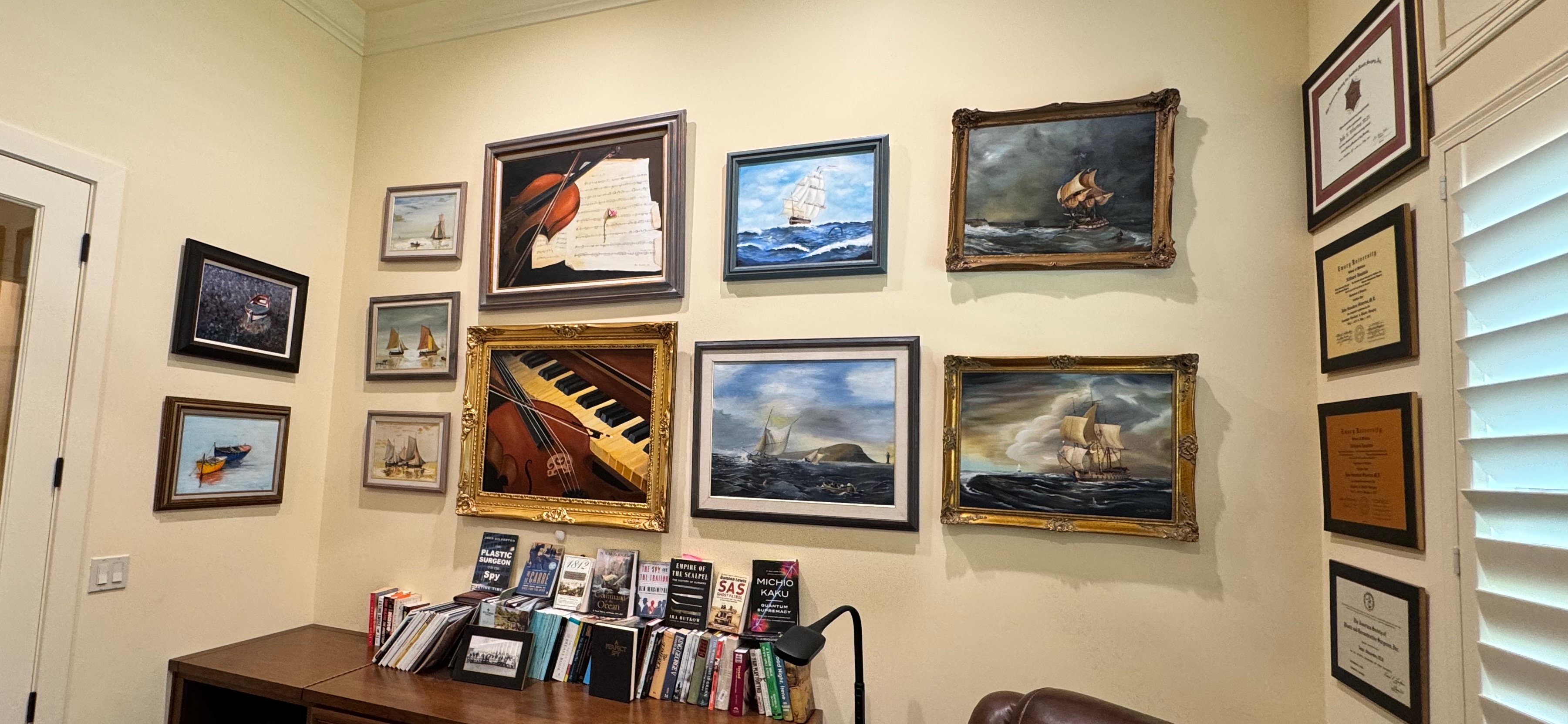
I have always enjoyed oil painting and developed my own style without mentors. Through trial and error I learned about perspective, colors, and how to balance the picture. Then AI came along. It substituted for a real human painting coach, teaching me about grisaille, or grey scale underpainting often used by the old masters, and how to use fine transparent washes and glazes to achieve complex deeper effects. I found this very helpful for the sea and ocean scenes that I am fond of.
AI became my painting mentor, providing constructive criticism of my art, improving my skills, and being a great help.
AI did not write my book any more than it was unable to actually create my paintings. AI was my mentor in both skills.
AI is different from a human in that it is always up to speed with my creations, available at any time, and gives almost instant feedback, and costs nothing as long as I restrict the amount of time I use AI. For that, I am grateful.
Stay Informed
Get updates on new releases and exclusive content.